keynote speaker: Susy Macqueen
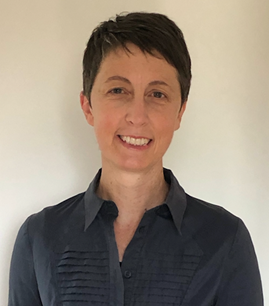
susy macqueen phd
Susy Macqueen is Senior Lecturer in Applied Linguistics at the Australian National University. Her research interests lie at the intersection of second language learning, language assessment and language use in health and educational contexts. She has a background in second language teaching and test development. Her publications include The emergence of patterns in second language writing (Peter Lang, 2012) for which she won the Christopher Brumfit Thesis Award 2010. Her book with Ute Knoch, Assessing English for Professional Purposes (Routledge, 2019), won the ILTA/SAGE Best Book Award 2020.
keynote abstract: the private and public lives of test constructs
The ‘test construct’, or whatever it is the test is trying to measure, is at the heart of assessment work. A clearly defined test construct drives the development of assessment tools and the validation of their uses. Or does it?
This view of constructs, commonly held by language assessment specialists, is challenged by the different ways that constructs are elicited, understood and experienced out in the world. In this talk I examine constructs as spheres of activity which involve diverse stakeholder worlds, ranging from the more ‘private’ activities of developers and test-takers to the more ‘public’ activities of marketers and policy makers. Seeing constructs as a dynamic network of construct-related activity has the potential to enable more congruence between how people understand and use language assessments, and the operationalized constructs that are experienced by assessees. This view also enables us to broaden our conceptualisation of what a language test is. It gives us the opportunity to look beyond our traditional assessment tools to the increasing range of assessment situations which implicate language ability, but are not traditional language tests.
This view of constructs, commonly held by language assessment specialists, is challenged by the different ways that constructs are elicited, understood and experienced out in the world. In this talk I examine constructs as spheres of activity which involve diverse stakeholder worlds, ranging from the more ‘private’ activities of developers and test-takers to the more ‘public’ activities of marketers and policy makers. Seeing constructs as a dynamic network of construct-related activity has the potential to enable more congruence between how people understand and use language assessments, and the operationalized constructs that are experienced by assessees. This view also enables us to broaden our conceptualisation of what a language test is. It gives us the opportunity to look beyond our traditional assessment tools to the increasing range of assessment situations which implicate language ability, but are not traditional language tests.